
WAUKESHA HEALING
WALK MEMORIAL
A healing space to honor Waukesha Christmas Parade victims as an opportunity for procession and remembrance.
Waukesha, Wisconsin
7,000 SF
2022



-
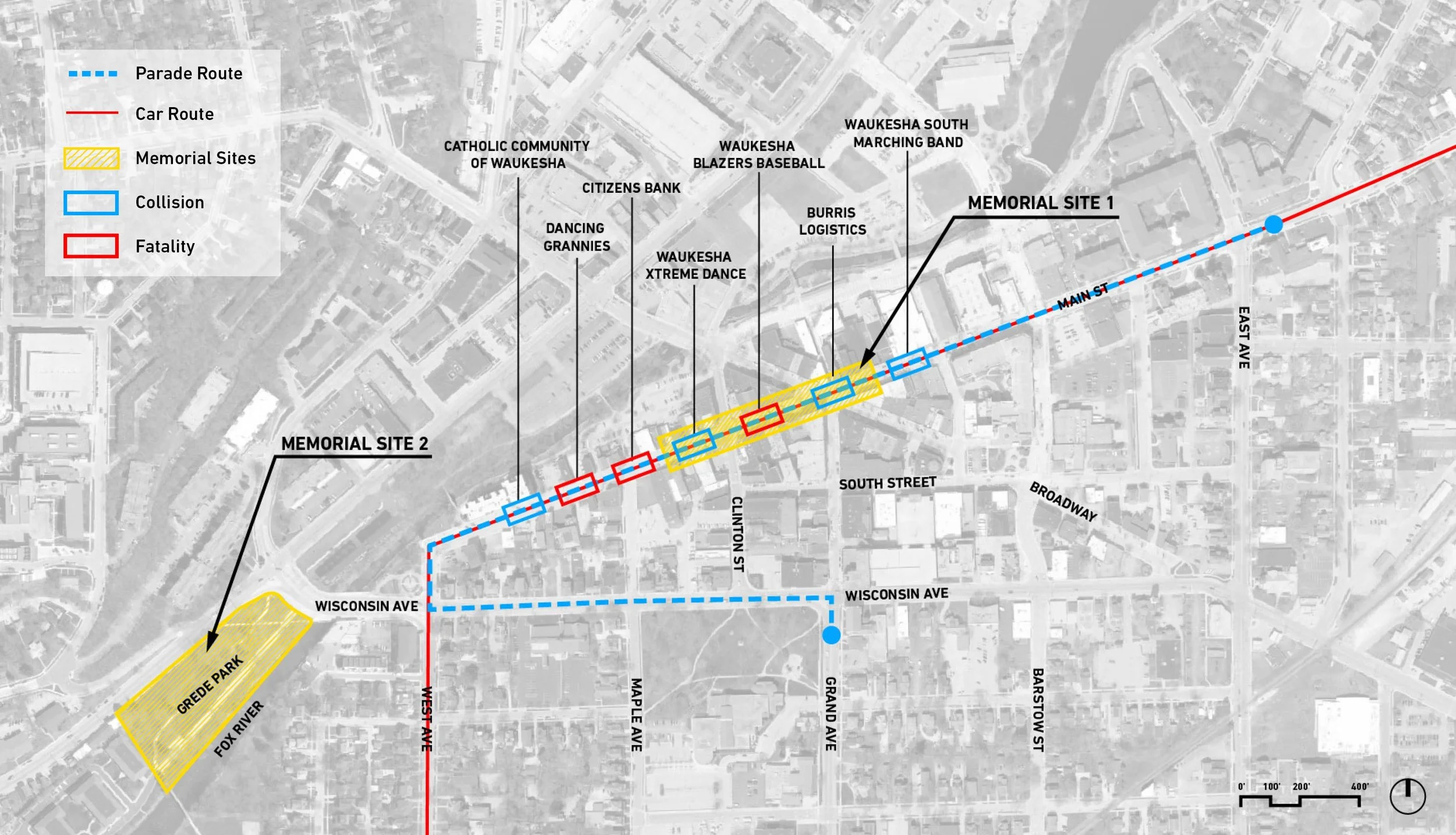
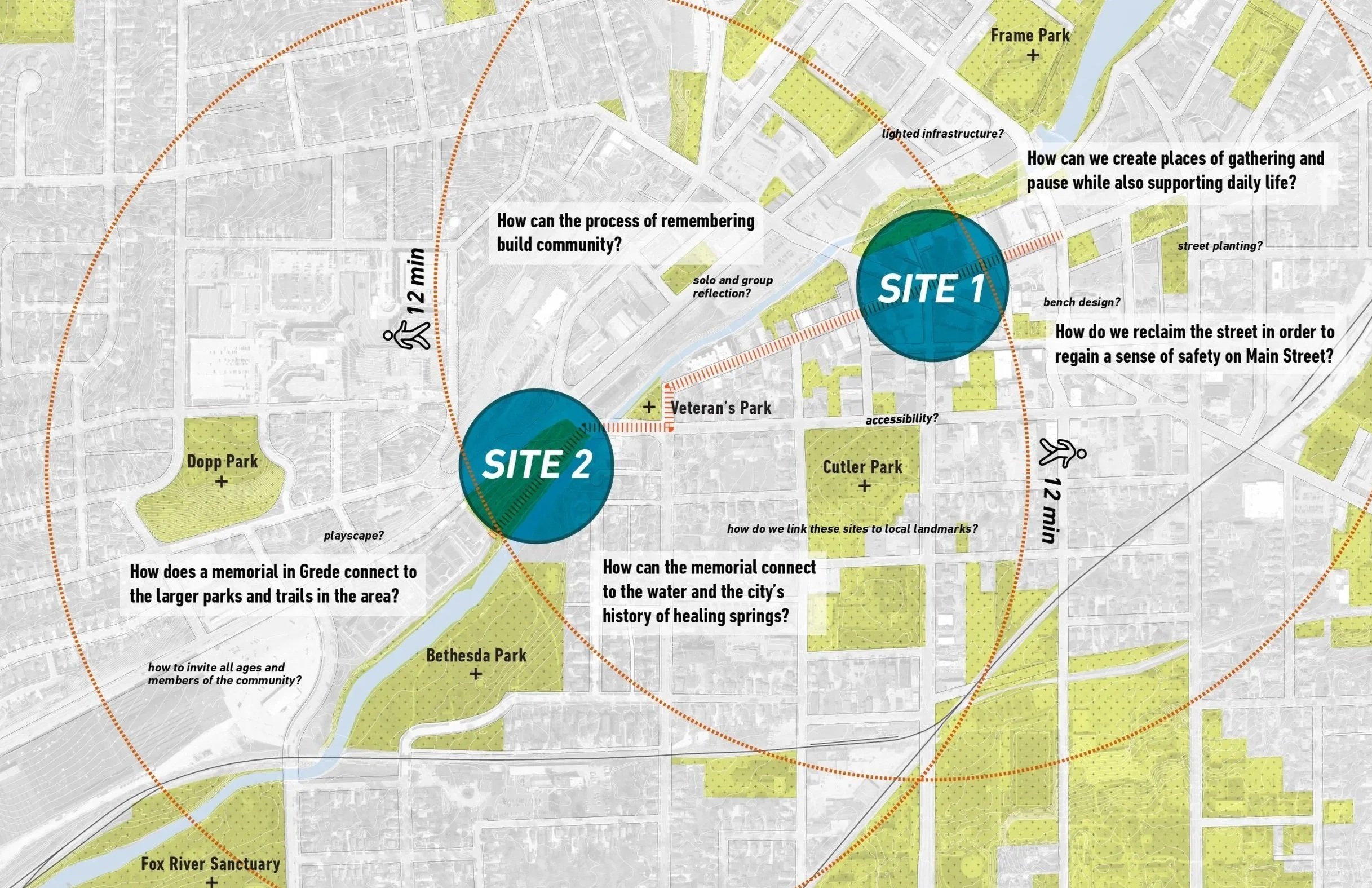
How can a memorial span across a city and reclaim the street? The Waukesha, Wisconsin community asked designers to propose a memorial design in honor of the six victims killed and many more injured by a vehicle driven intentionally into the crowded, annual Waukesha Christmas Parade. The proposal interpreted the request for two memorial locations, one at the parade site and one at a nearby park, as an opportunity for procession and remembrance between these two spaces. The Waukesha Healing Walk honors the victims through action, by reclaiming the street and creating a safer, pedestrian-friendly landscape.

-
As the hometown of the principal landscape architect, the team had a distinct advantage in understanding the history and cultural context as well as a deep, personal connection to the site. Our process began with a deep dive into its history, adjacent assets, and the people to be honored by this memorial. The Fox River, which passes between the two sites, was a particular focus, and we saw this memorial as part of a larger network of public spaces connected by the river and trails. Street level analysis also helped to inform recommendations for improvements to the pedestrian experience.
As a landscape-led team, the approach was to consider the urban fabric as an integral part of the memorial. The team envisioned the transformation of the street into a space where people can walk without fear and with dignity, by creating places that feel welcoming and safe to pedestrians daily as well as during annual events and parades. Giving power to the pedestrian is an important symbol of resilience of the Waukesha community and a message of strength and unity.
-
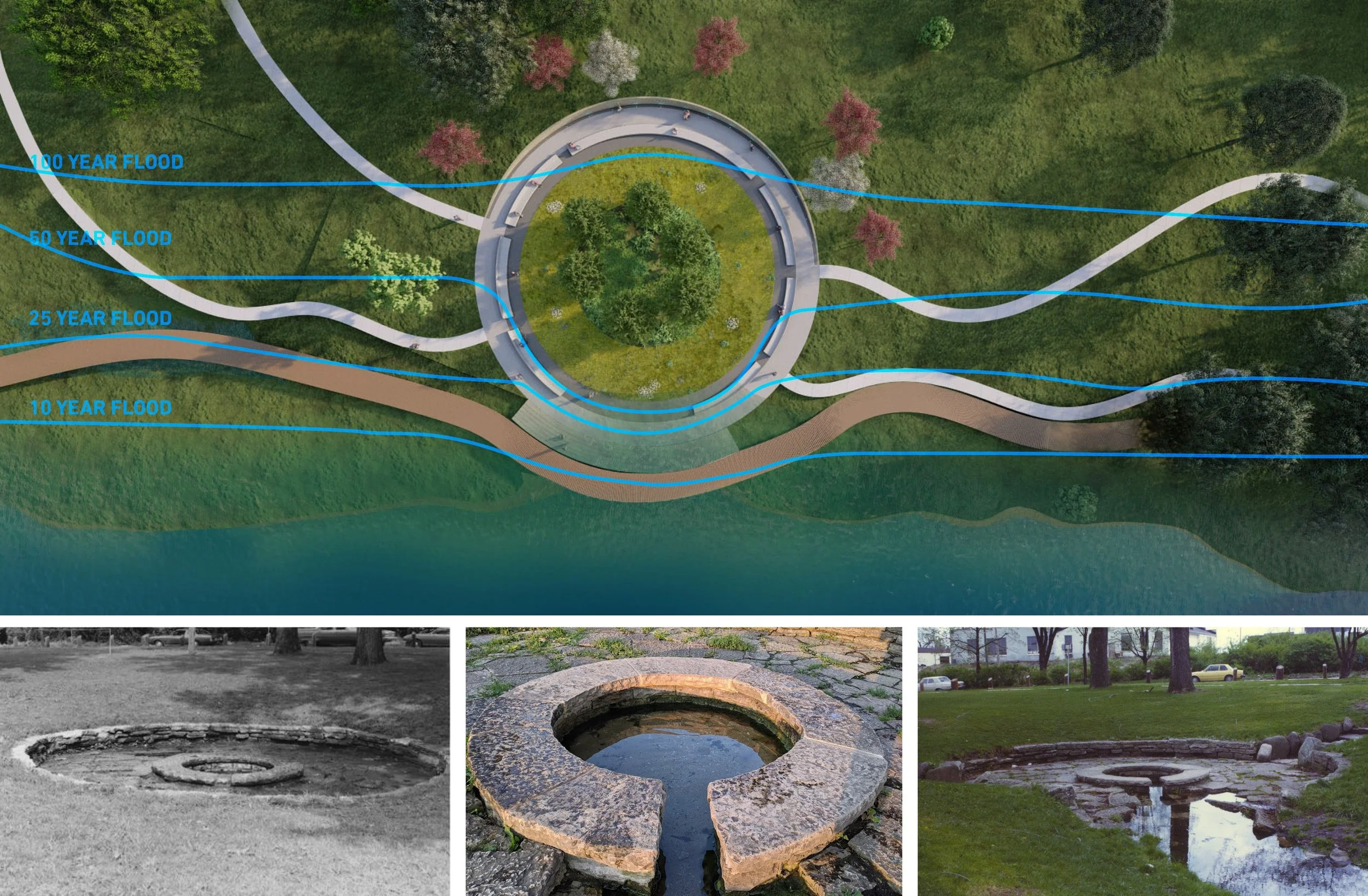
Grief and healing are not linear experiences. Like gardens, healing requires attention and tending, growth and care. Plants, stone, water, and light are representative of strength and healing, showing the capacity to grow together. Waukesha’s springs have long been a destination for healing, including at Grede Park, making this an instinctual place for the community to collectively heal after the enormous trauma experienced together.
The design proposal reconsiders the memorial tradition toward a more active and restorative approach. This memorial suggests that memorializing does not require a static or singular site but rather can invite visitors to honor the victims of this tragedy by walking, planting, gathering, engaging, and reflecting across the city of Waukesha.
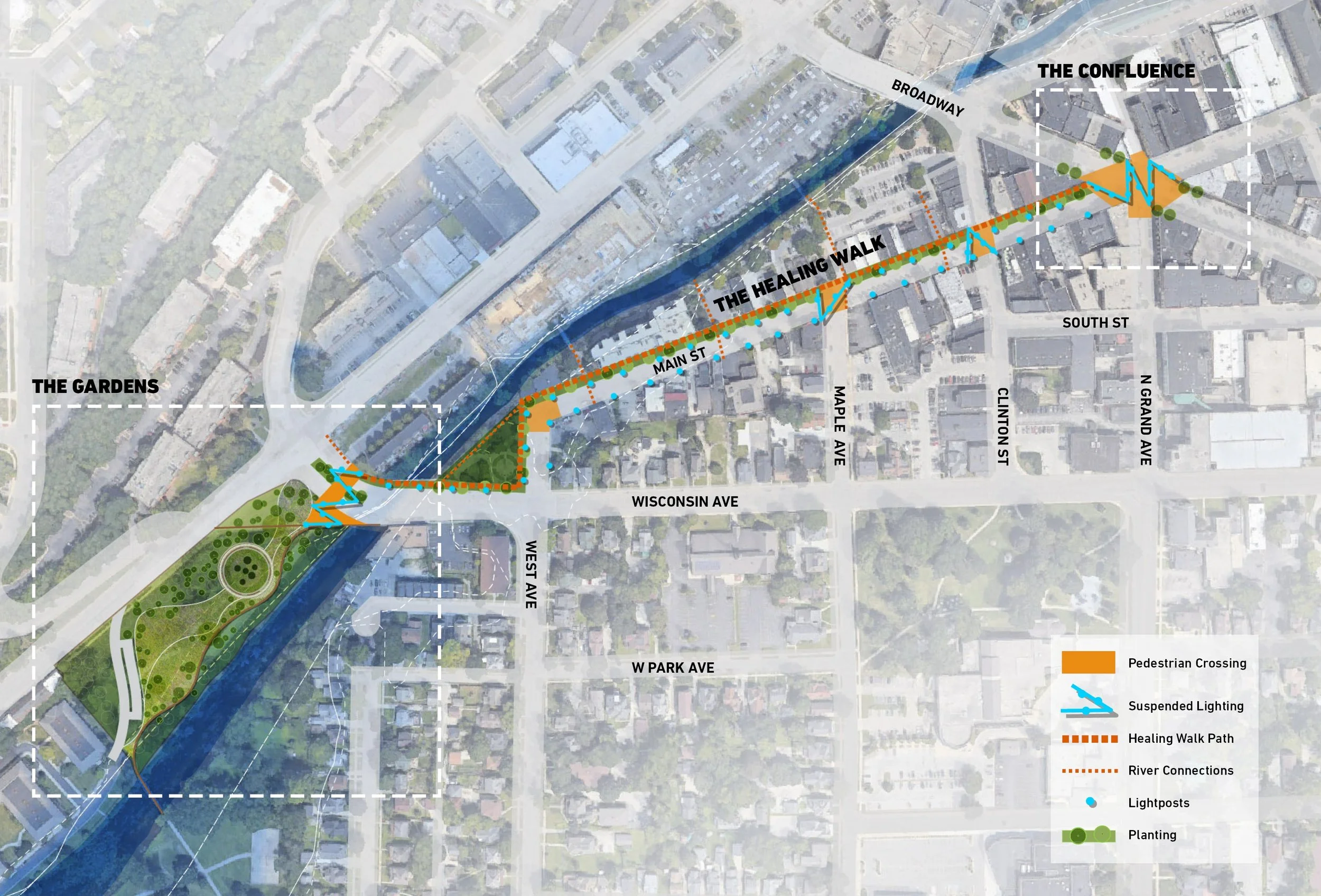
The Confluence: The Healing Walk begins at the start of the parade route at the Five Points intersection. At the Confluence, a series of catenary lights suspended over the intersection at Main Street and West Broadway indicate the significance of this space. Lighting and expanded pedestrian crossings extend along the parade route towards the memorial gardens. On important anniversaries and special events, the lights shine blue to honor the victims.
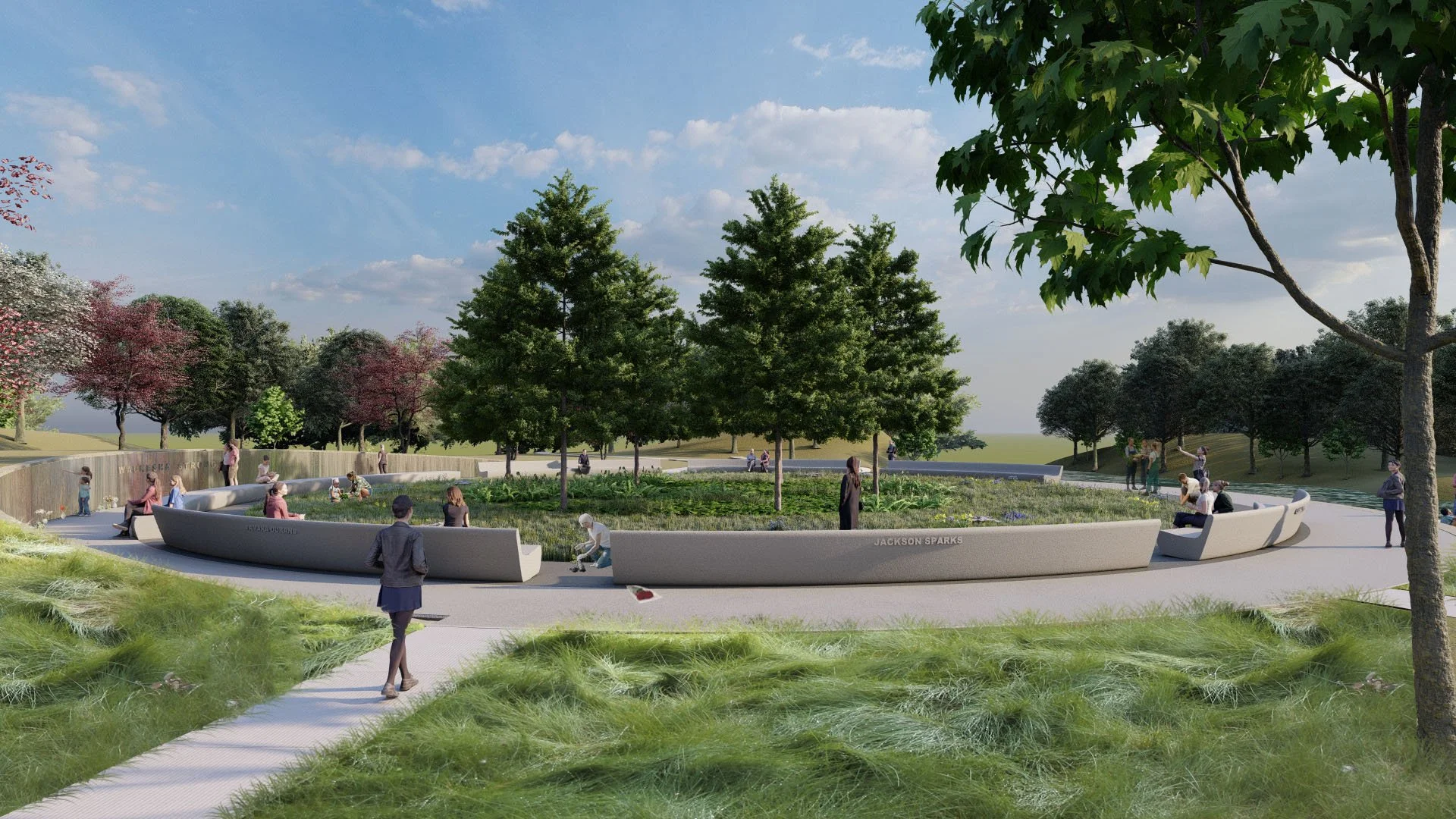
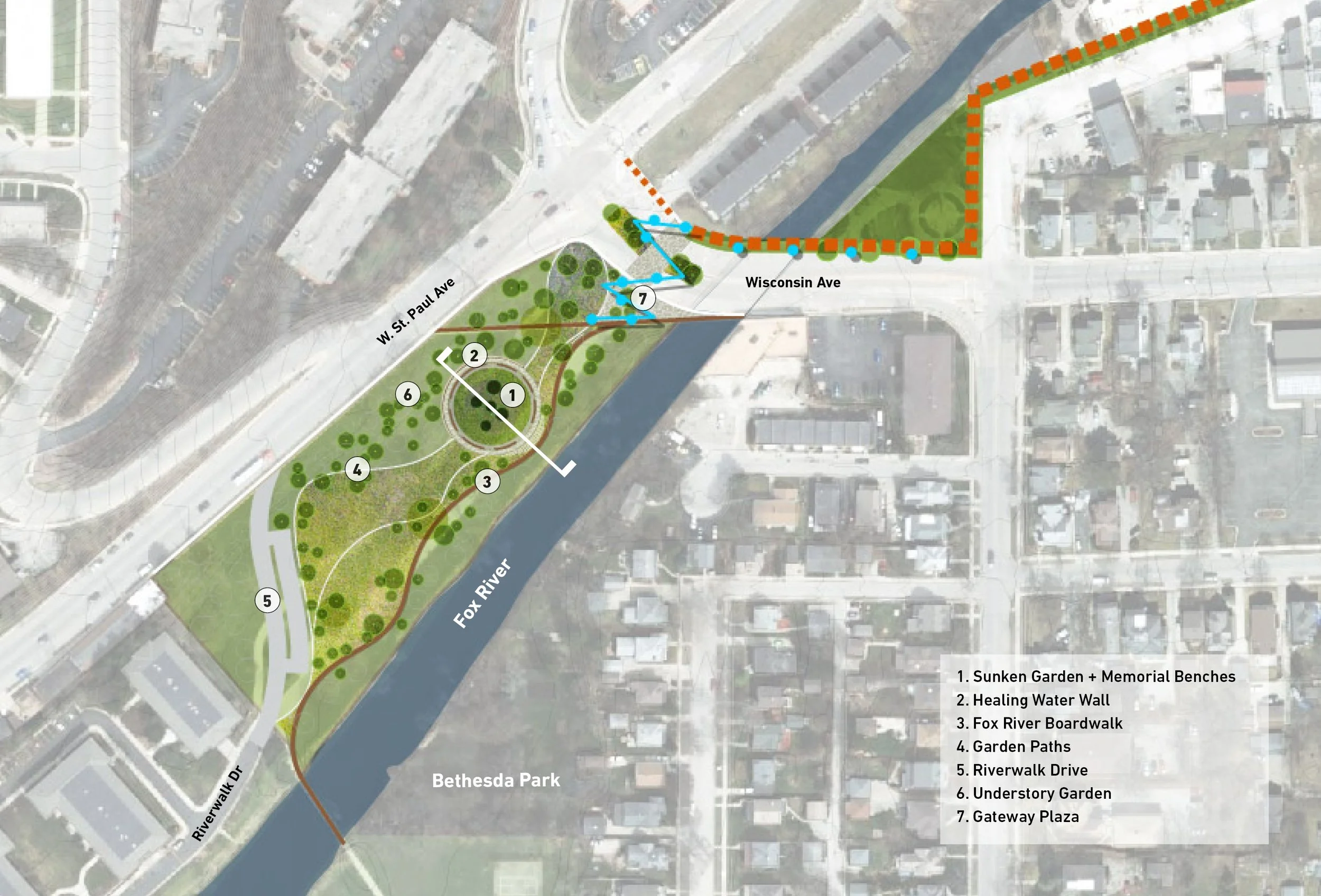
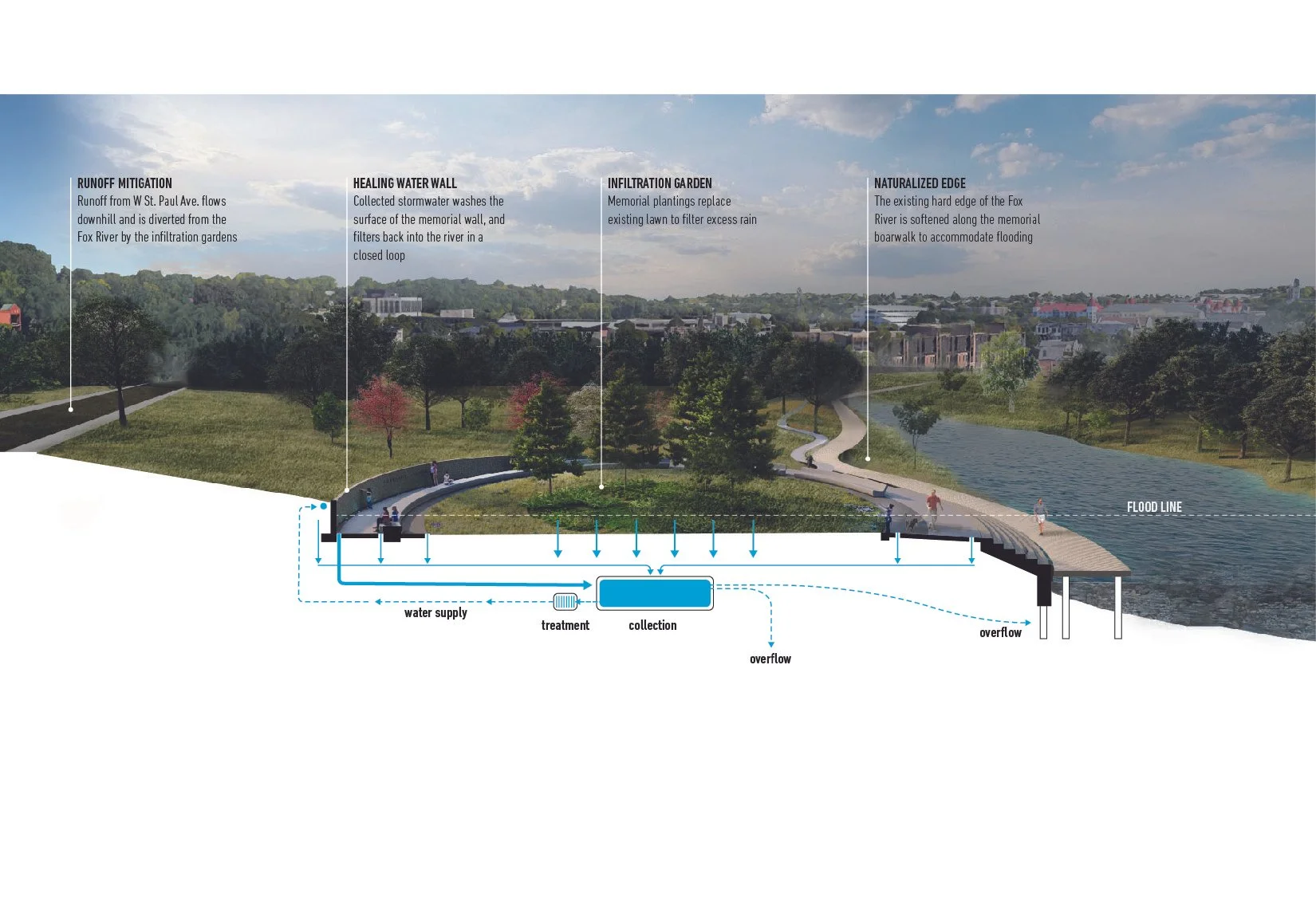
The Gardens: At the terminus of the Healing Walk is a series of memorial gardens located at Grede Park. A series of meandering garden paths and a boardwalk following the new naturalized edge of the Fox River all lead to a sunken circular Healing Garden at the center of the park. Within the sunken Healing Garden, a cluster of six evergreen trees honor the six victims. The surrounding planting is a community-led healing garden of grasses and perennials. Six memorial benches honor the victims, Tamara, Jane, Wilhelm, Leanna, Virginia, and Jackson. On the north side of the sunken garden, a water wall retains the slope. Water runs down the face of the wall, providing a calming sound and cooling presence. The names of the victims are etched into the walls surface, washed by the water.
PROJECT DETAILS
Location Waukesha, Wisconsin
Client City of Waukesha
Team TEN x TEN
Area 7,000 SF
Status Unbuilt
AWARDS
2023 ASLA Minnesota Merit Award for Unbuilt Works