
ESOX HOUSE AT FARWELL-ON-WATER
A development honoring an industrial past by incorporating a former factory and introducing a dynamic public plaza within a revitalized neighborhood.
Saint Paul, Minnesota
2 acres
2020-2024
-
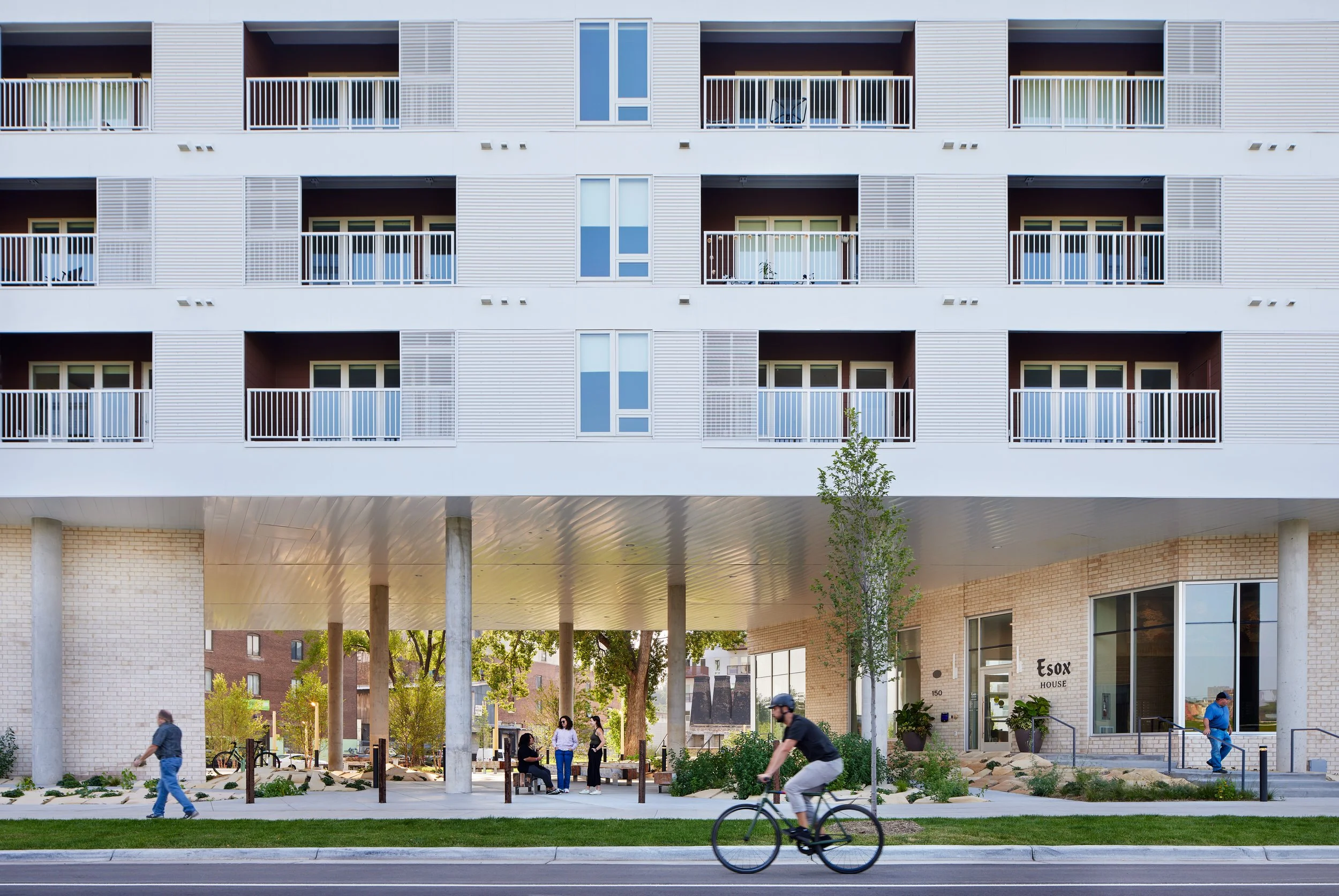
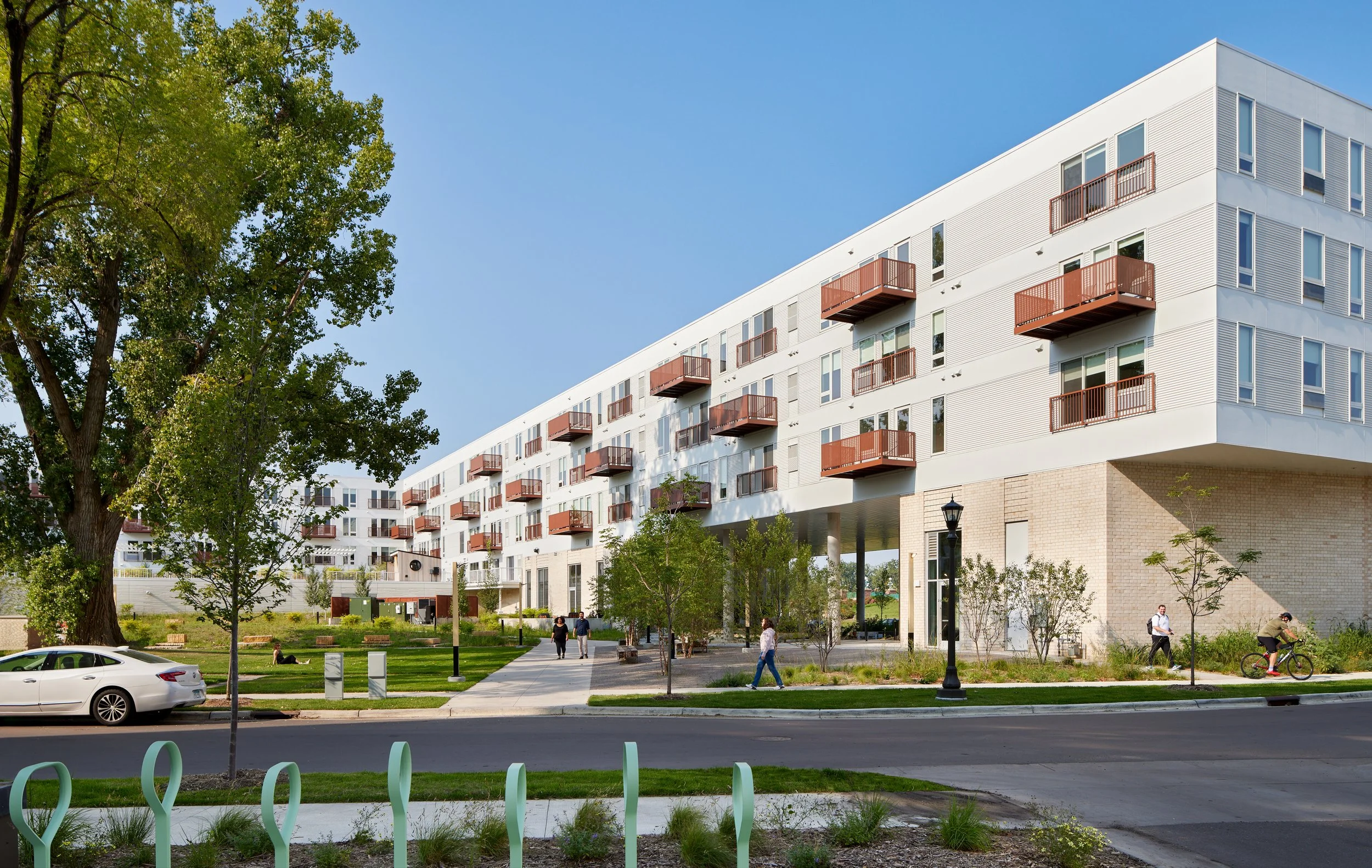
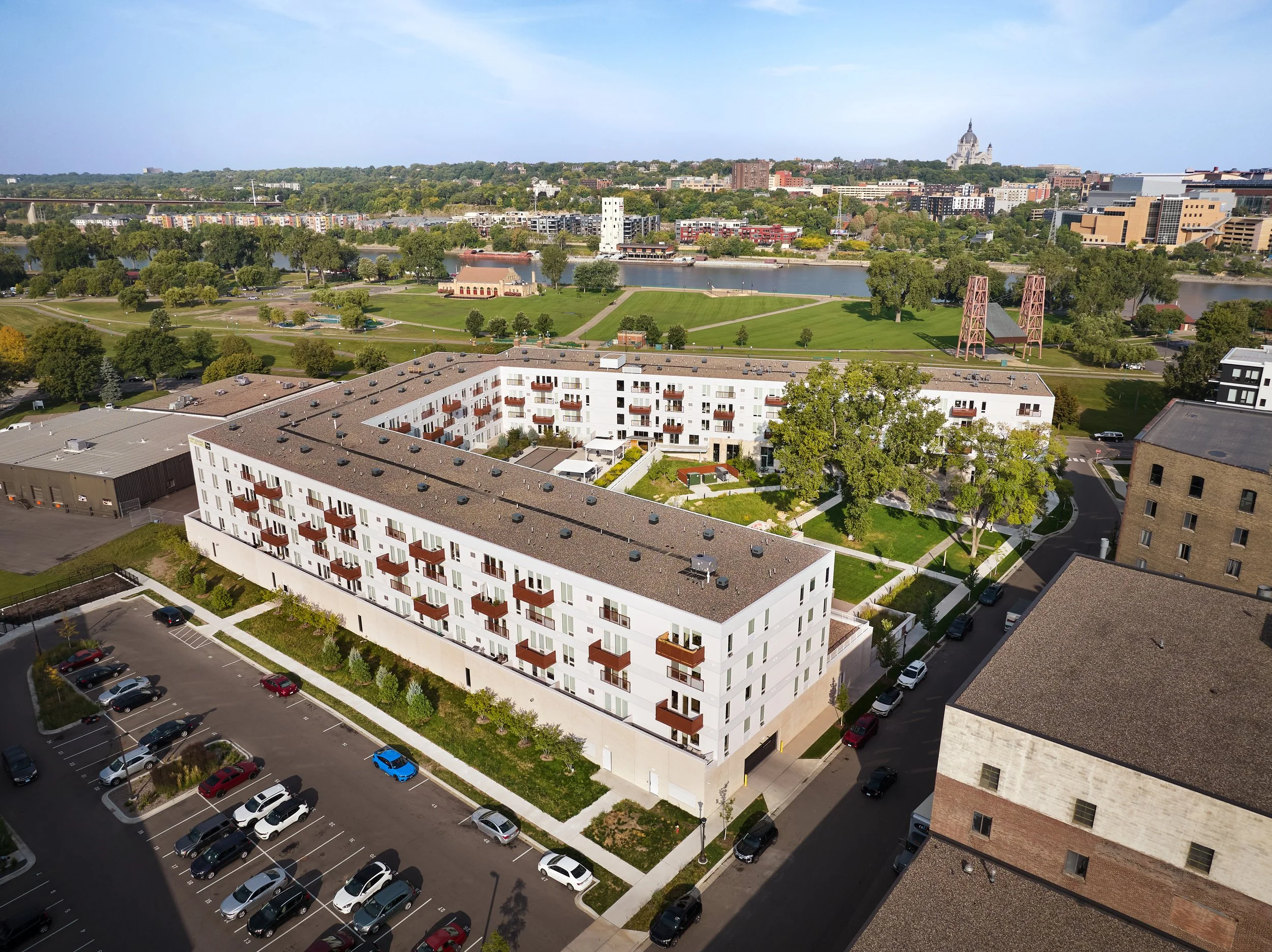
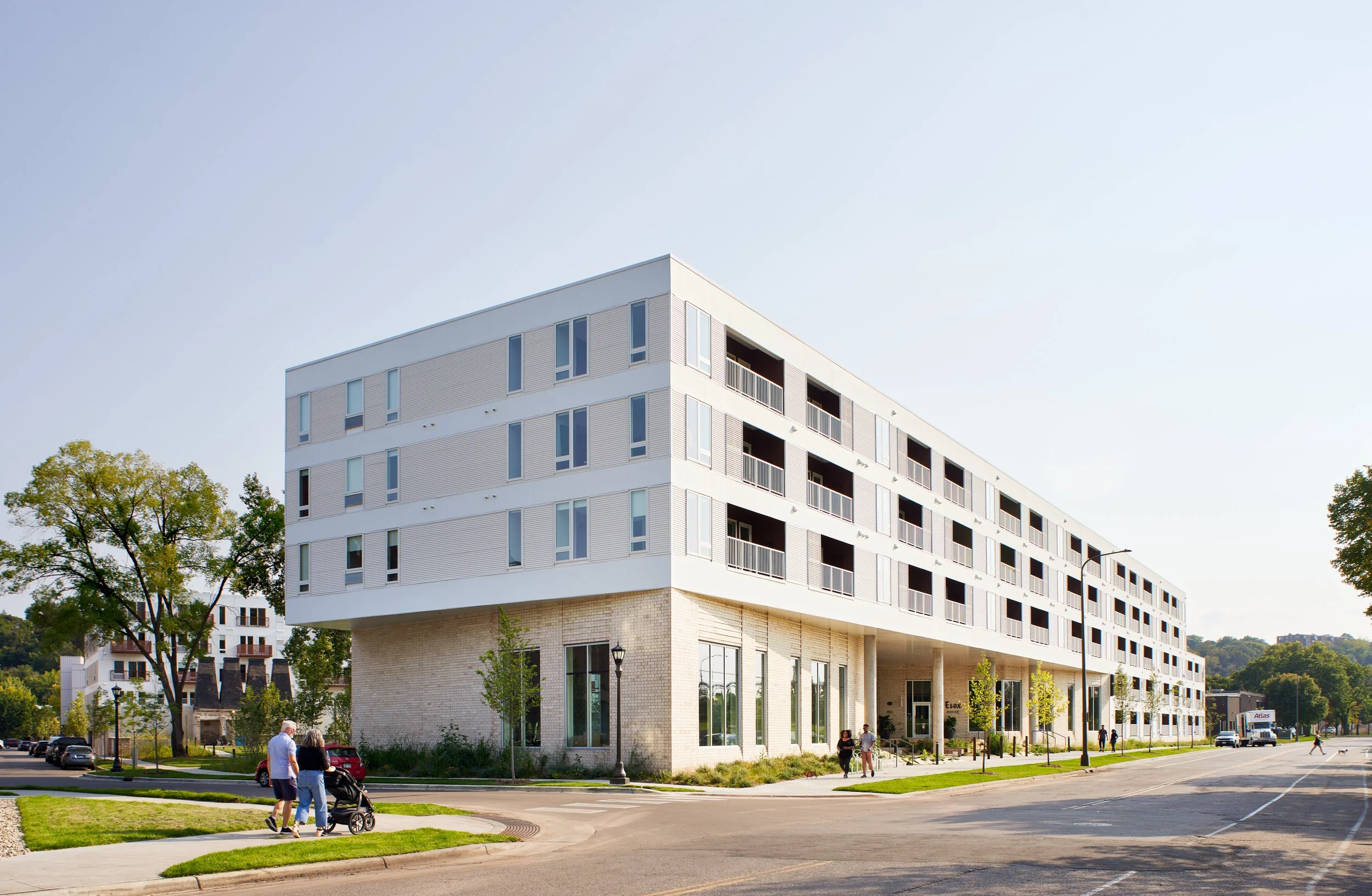
The Esox House courtyard and housing are the focal point of Farwell-on-Water, a new creative community along the Mississippi River. Located on a contaminated site within the Mississippi River’s flood zone, the project skillfully addresses challenges related to grading, stormwater management, and cultural context, while featuring highly connected and active public spaces.
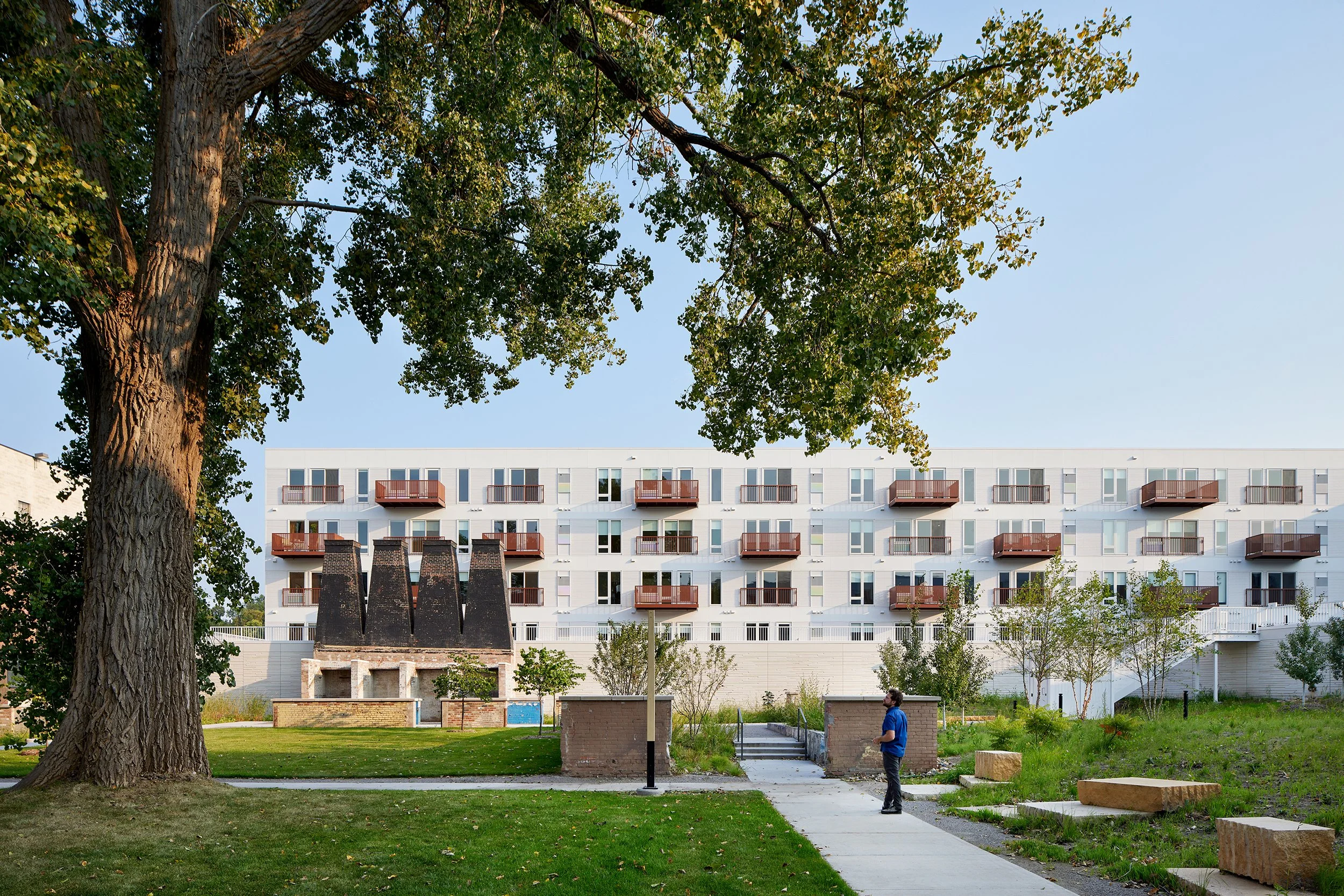
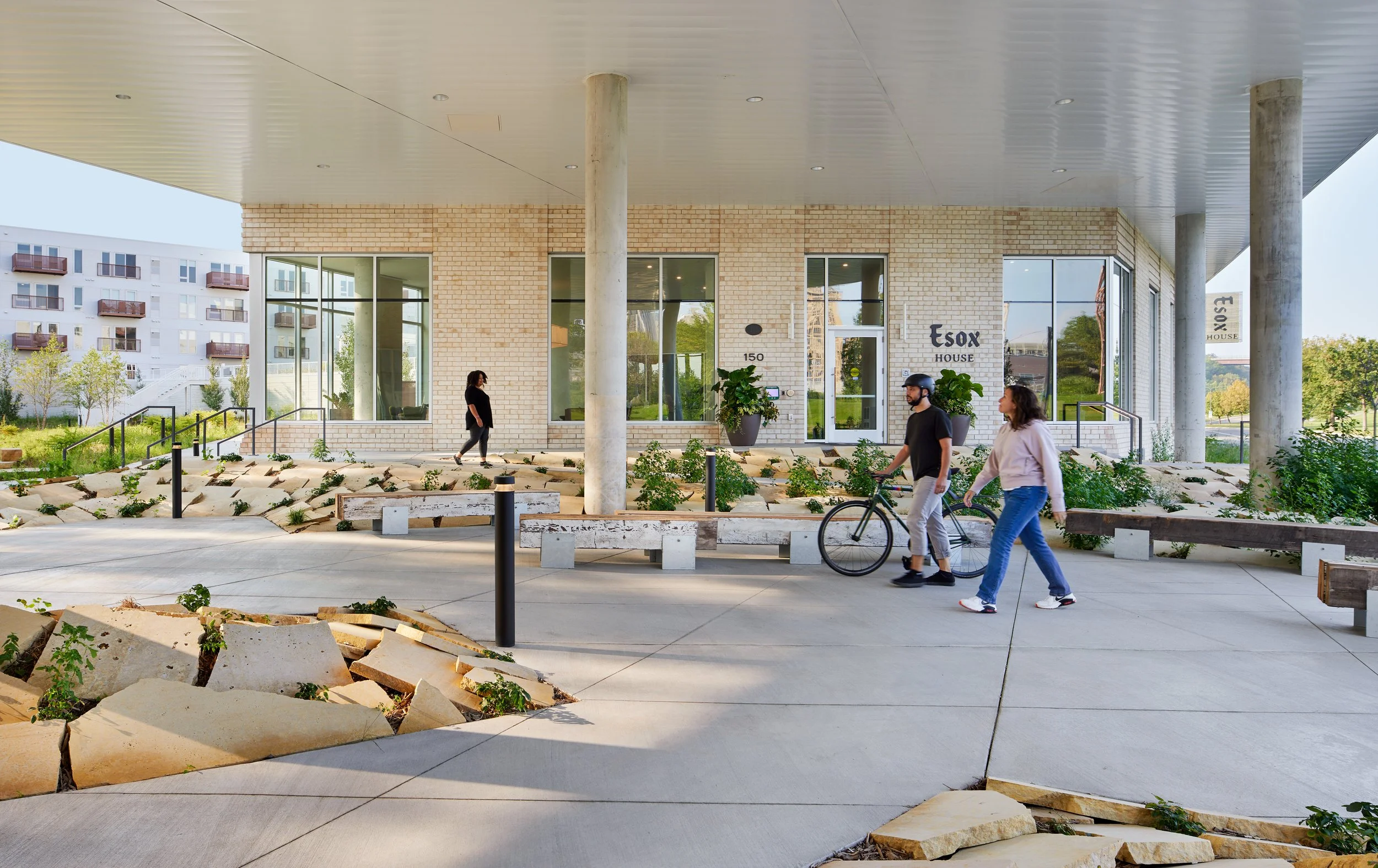
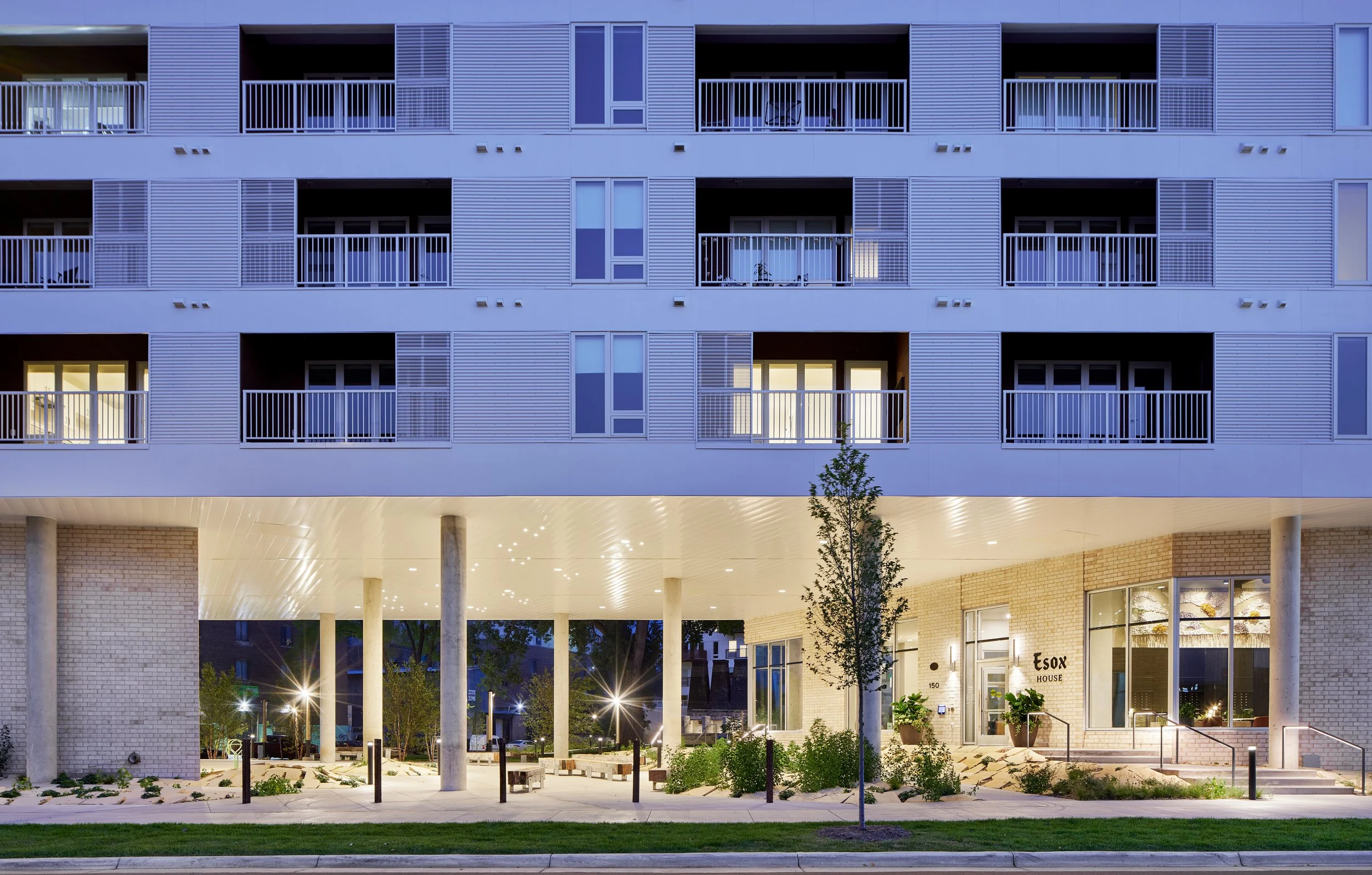
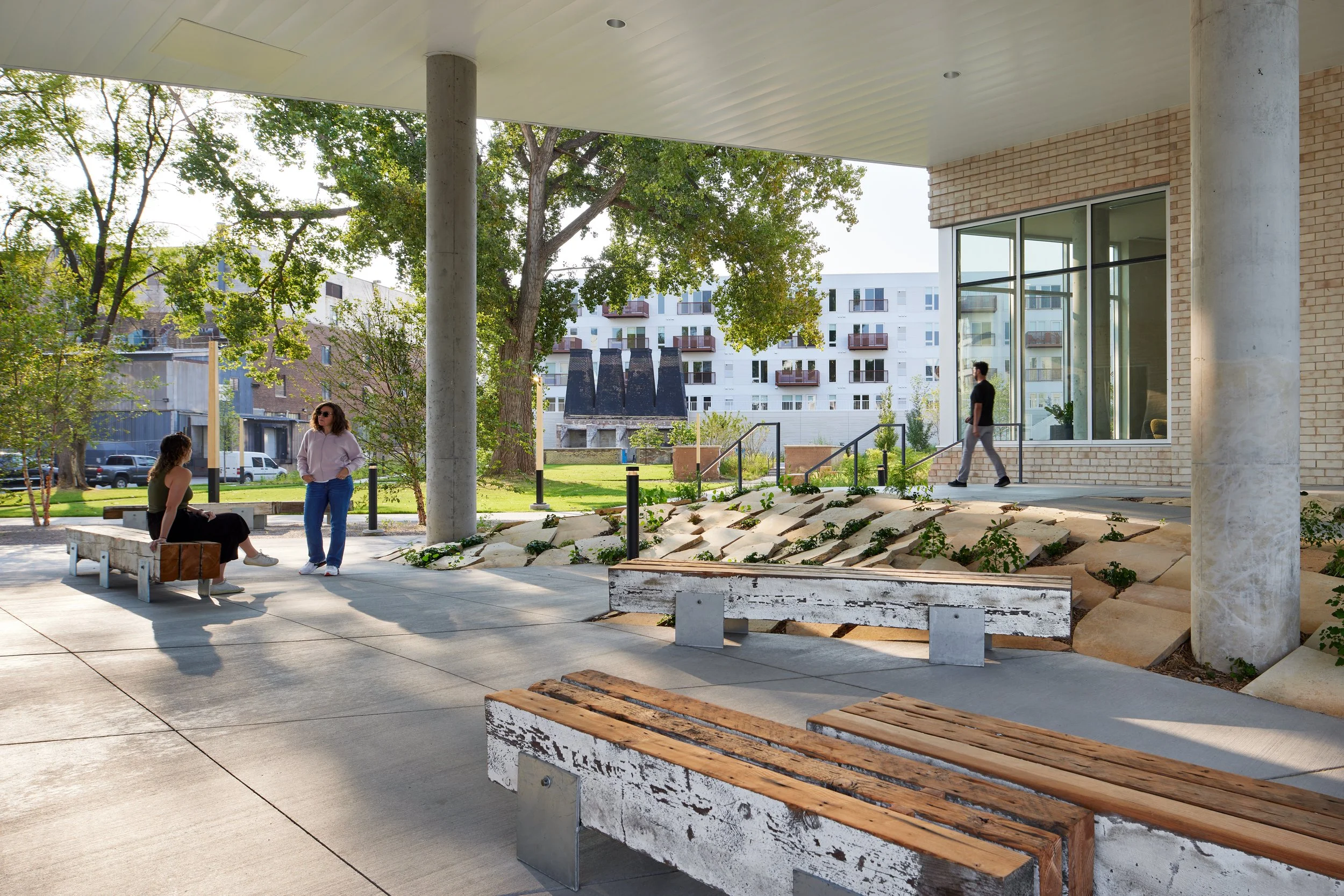
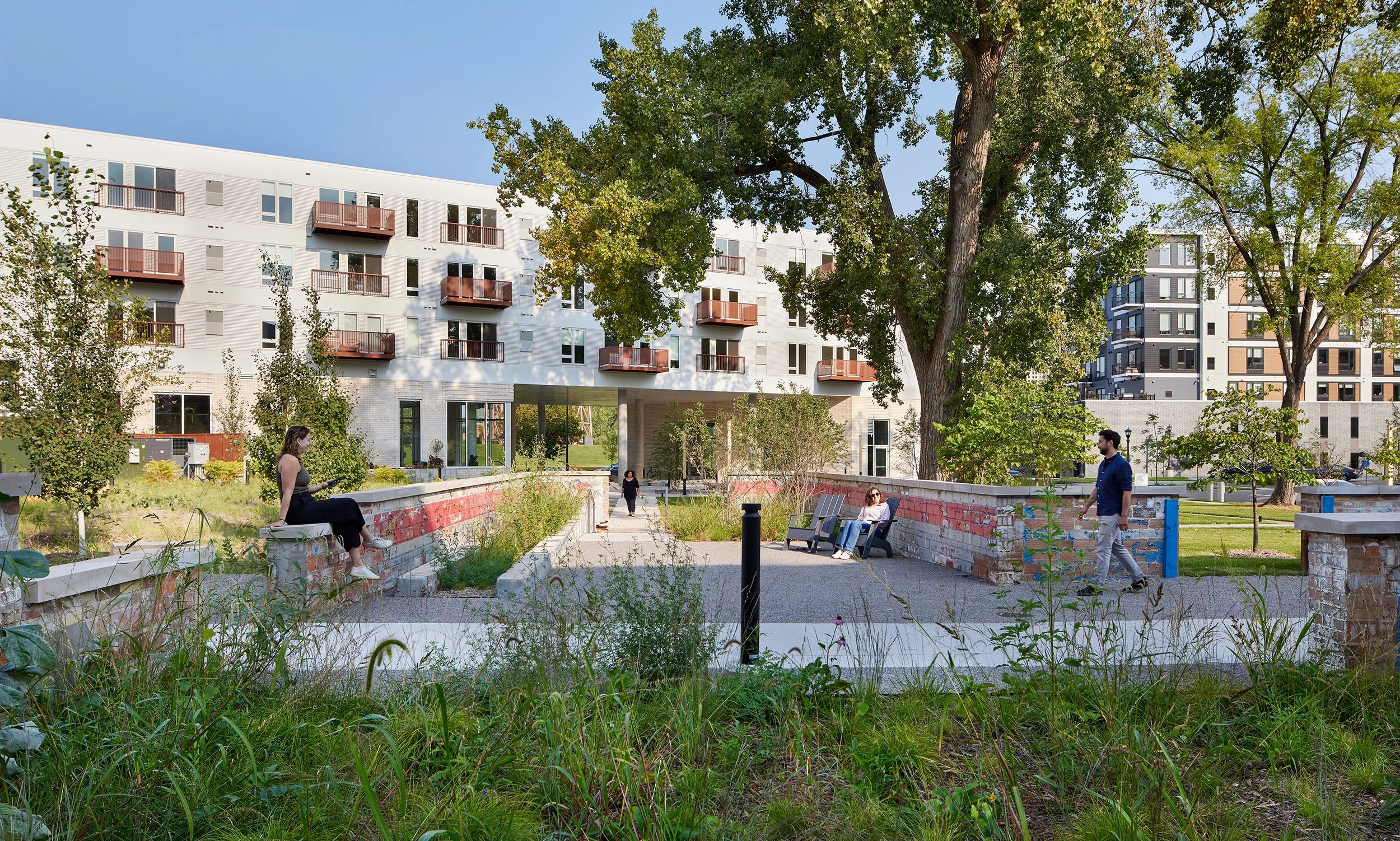
The landscape design preserves the remains of a former factory and mature river-bottom trees, while repurposing existing train rails and building timbers as site furniture. At the heart of the development is a dynamic public plaza, defined by wild plantings and thoughtful programming, which serves as a vibrant destination within the growing neighborhood.
-
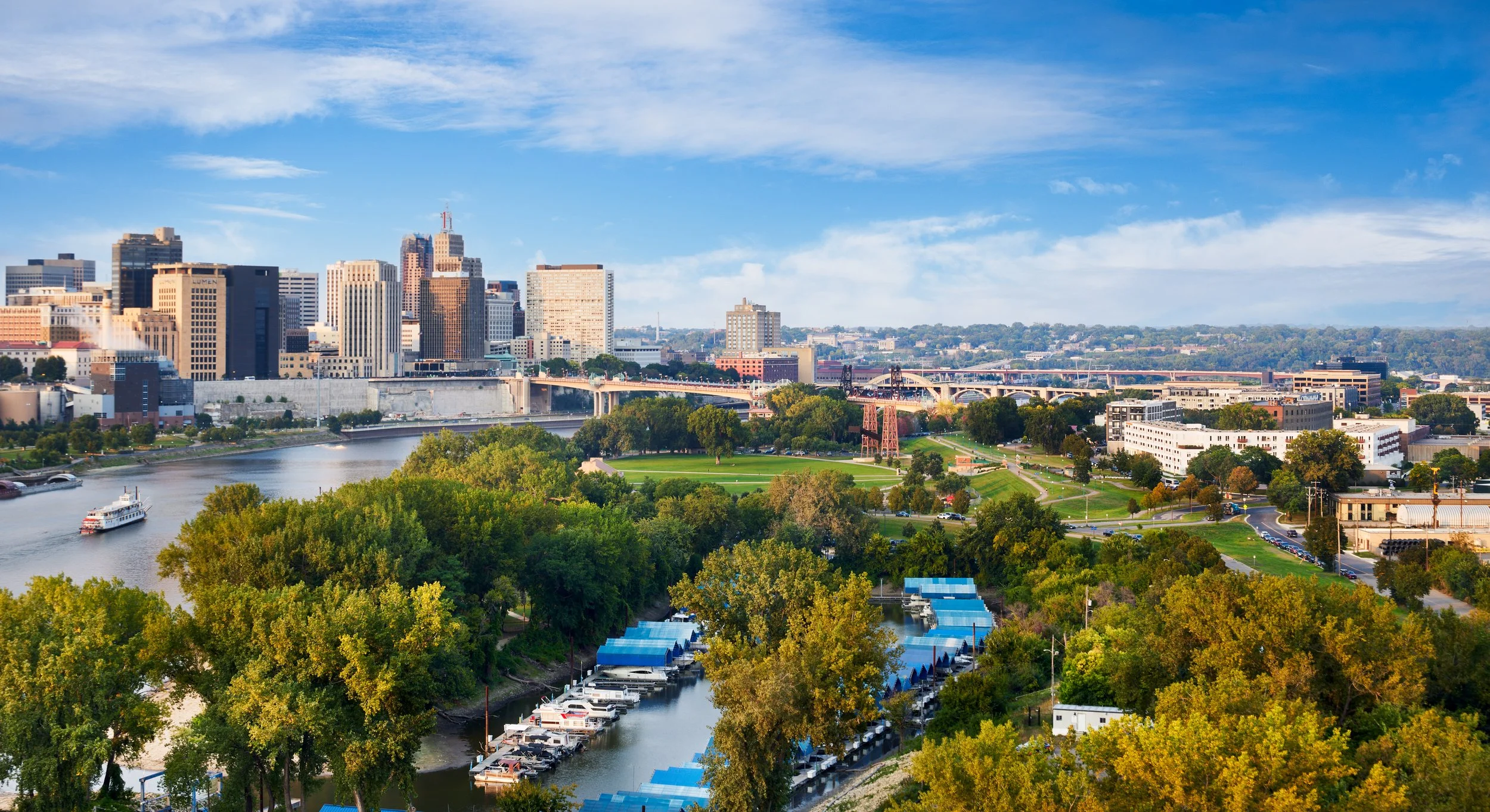
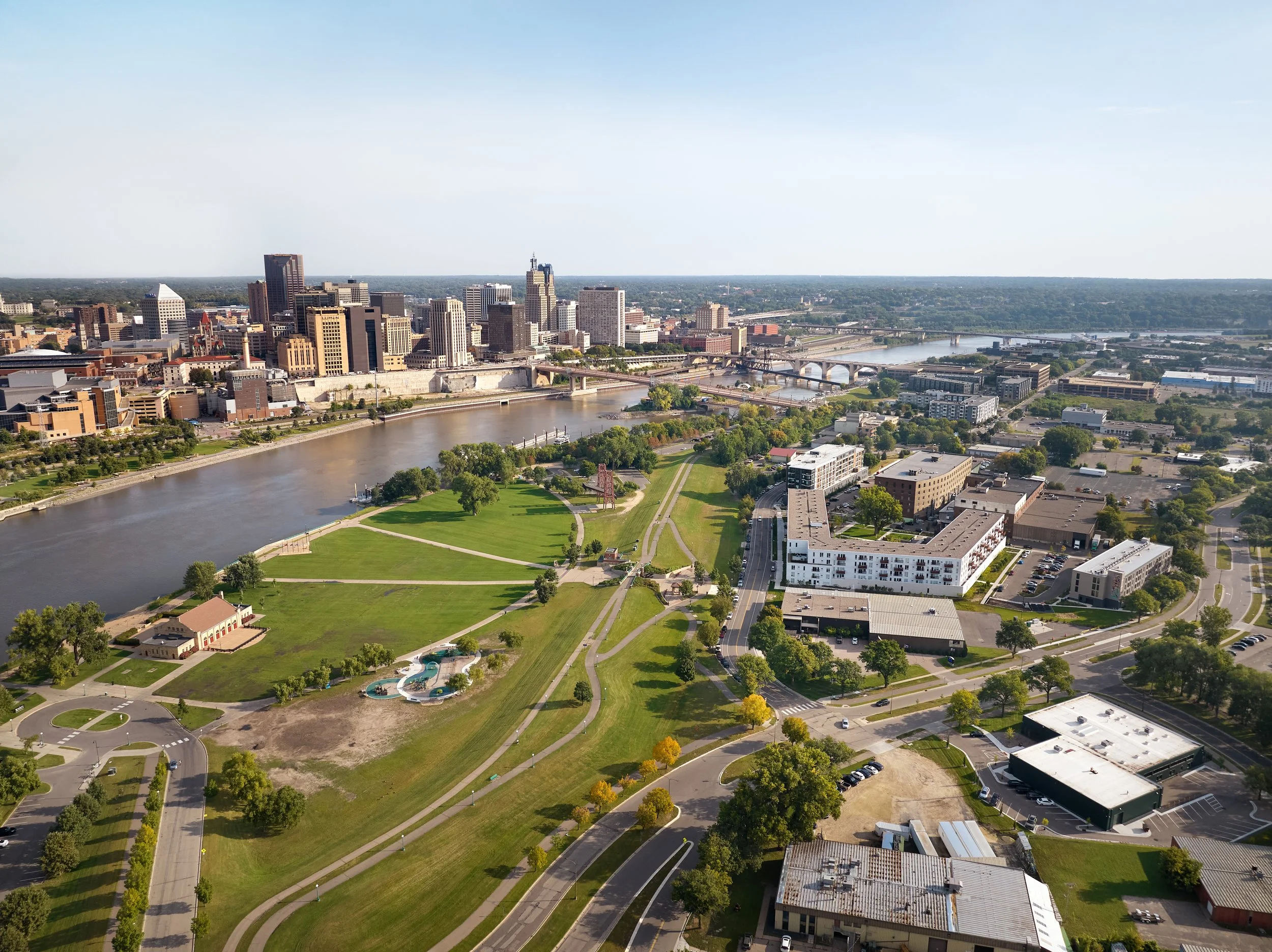
This neighborhood, historically known as the West Side Flats, occupies the lowlands on the south bank of the Mississippi River—adjacent to Harriet Island Park and directly across from downtown Saint Paul. The design team drew upon historical maps and accounts from the Minnesota Historical Society to uncover the significant layers of the site’s past.
Traces of the site’s history—recurring floods, distinctive geologic strata, and the 19th-century immigrant village—are embedded in the final design. The design team studied the nearby Platteville limestone bluffs to inform the detailing of a featured field of stone slabs within the landscape. Mapping the original street network and grading laid the groundwork for reintroducing the historic street grid and a significant soil installation —respectively resulting in a new roadway and deep ground plane to support a thriving plant and animal community.
-
Key features of the project are the distinctive plantings and materials, which combine native/adaptive plants with reclaimed site furniture like timber benches, train rail bollards, and raw limestone slabs.
Central to the design is the preservation of a historic varnish factory building and mature cottonwood trees. The team incorporated them into the proposed design to sustain the original character of the site and add a sense of grounded whimsy.
Due to contaminated soil from the former factories, the site cannot infiltrate stormwater. To address this, the design introduces 1 to 3 feet of clean soil layered above the existing substrate vs removing existing fill. This approach not only protects people and stormwater from exposure to contamination and flooding, but also allows native plant roots to grow deep, supporting carbon sequestration, pollinator habitat, and overall ecological resilience.
PROJECT DETAILS
Location Saint Paul, Minnesota
Client Buhl Investors
Team TEN x TEN, Snow Kreilich Architects, Civil Site Group, Meyer Borgman Johnson (MBJ), Summit Fire Protection, Design Tree, Landbridge Ecological
Area 2 acres
Status Completed in 2024
Photos Gaffer Photography