
EAST DAVISON VILLAGE EDGING FRAMEWORK PLAN
Design Guidelines to improve privately-owned properties and catalyze neighborhood connections through small and affordable improvements.
Detroit, Michigan
2019-2021


-
The East Davison Village Edging Framework Plan establishes guidelines to improve privately-owned properties, building upon the Campau/Davison/Banglatown Neighborhood Framework Plan to catalyze neighborhood connections through small and affordable “edge” improvements. Over time, these improvements will stitch the neighborhood together like a quilt, strengthening connections, increasing ecological resilience and function, and providing places for people to gather, play, and share ideas.
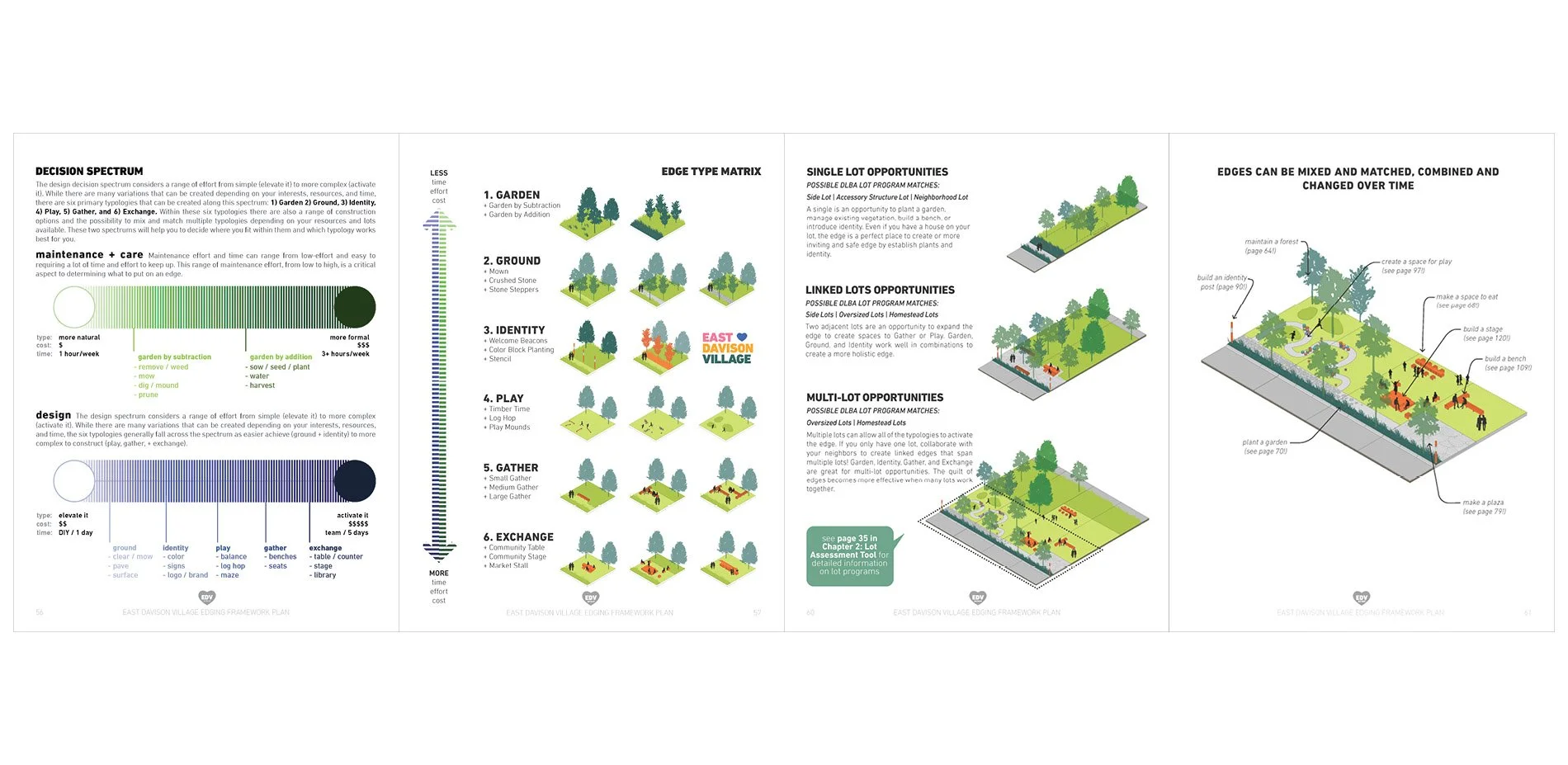
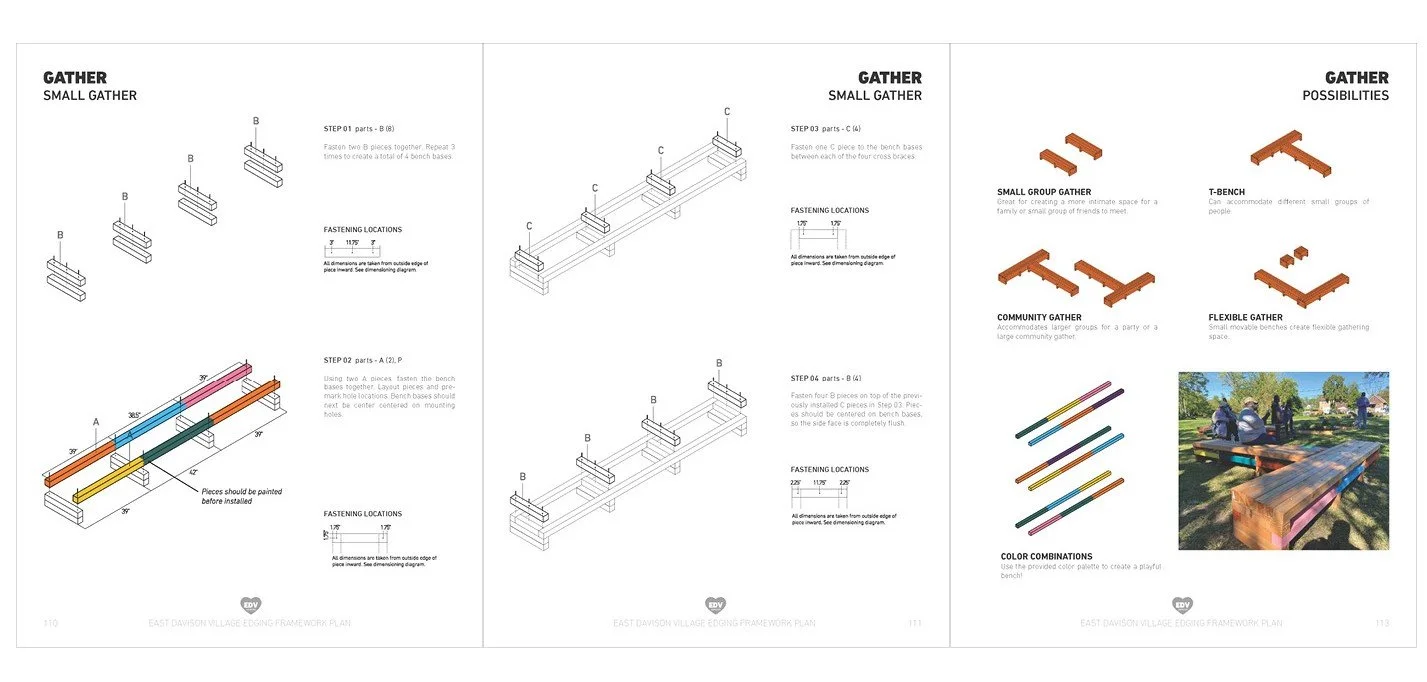
Edges are the outermost areas of a residential lot. They are the boundary along the street, alley, or sides of a privately owned property neighboring other lots. There are six types of edge designs: Garden, Ground, Identity, Play, Gather, and Exchange. The strategies for these typologies can be combined and adapted to create simple, single-lot spaces or expansive, multi-lot edge networks. The plan is designed to allow individuals to choose how to balance these dualities based on their skills, time, desires, and budget available.

-
The engagement process for the Edging Framework Plan was co-developed with the East Davison Village Community Group (EDVCG), a block club-turned-non-profit organization with a mission to provide empowerment and self-reliance for its members and attract resources to the neighborhood, with support from Global Detroit. EDVCG provided guidance and ideas through a series of focus group meetings, site tours, and phone interviews. The community engagement plan initially established by the project contract needed to be revisited in Spring 2020 due to COVID-19. The design team proposed reallocating travel expenses to combine virtual engagement with on-site “seed projects” in lieu of previously proposed community events.
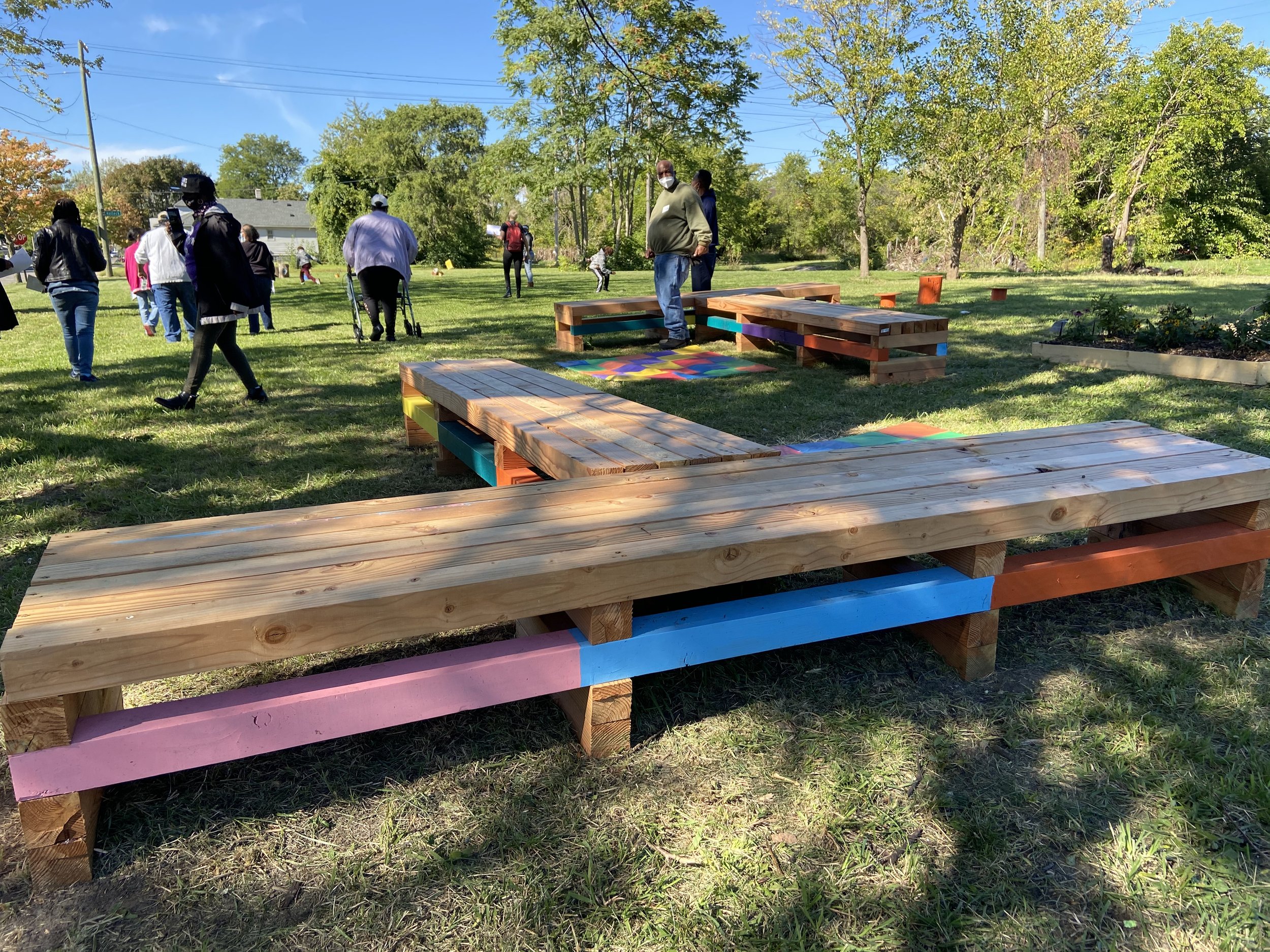
The re-allocated travel expenses funded three “seed project” installations that were selected and built by community members. The installations hosted events for community conversations and served as pilot projects that tested design ideas, allowing people to see and understand what a proposed “edge” could be.
-
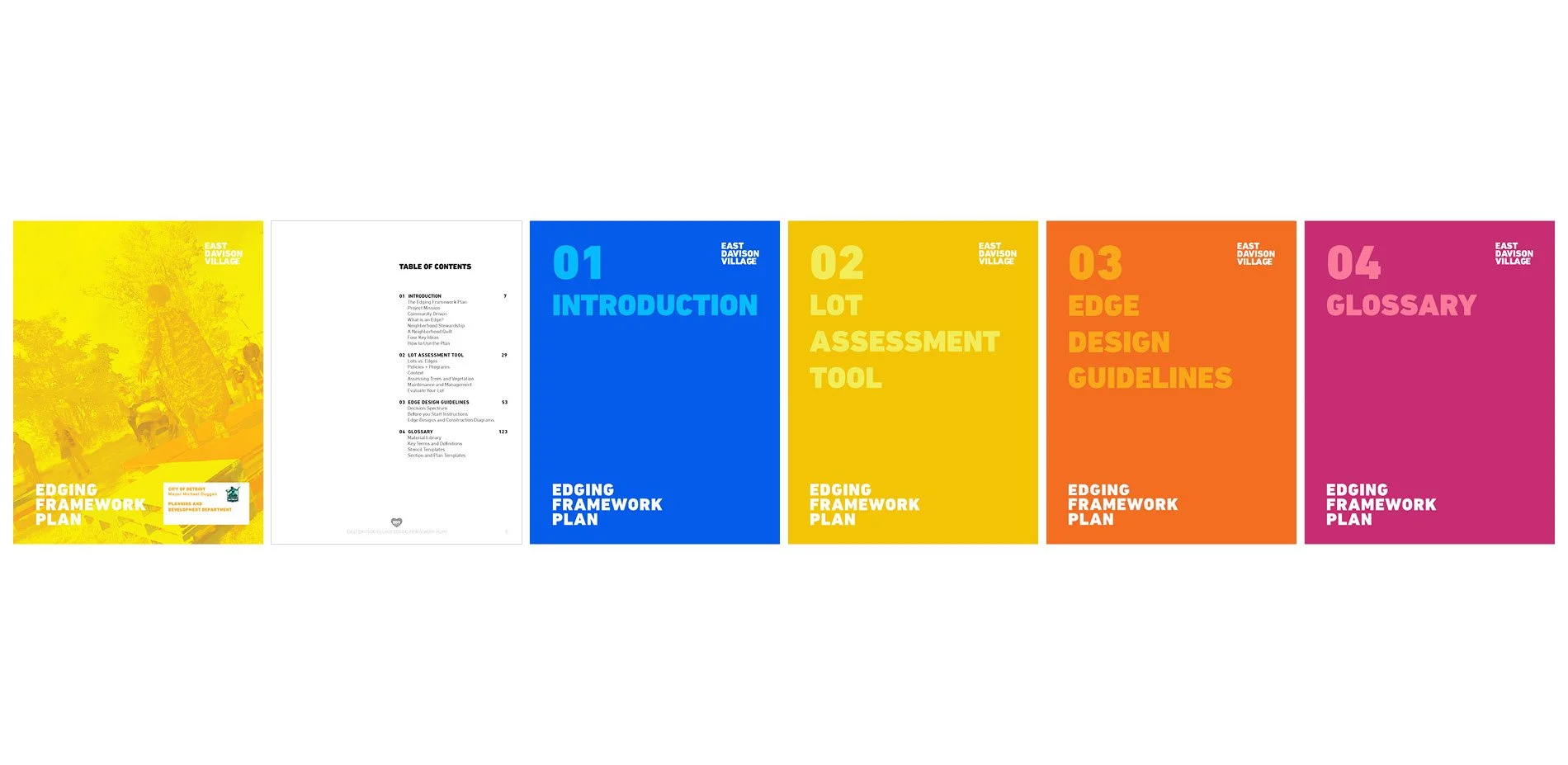
The plan communicates information in graphically compelling, easy-to-understand, and user-friendly ways. The guidelines include a site assessment tool, a planning and policy road map, six edge design typologies filled with community-led design ideas, and maintenance and management strategies.
PROJECT DETAILS
Location Detroit, Michigan
Client City of Detroit
Team TEN x TEN, D.I.R.T. Studio, Peter Del Tredici, Global Detroit
Status Plan Completed in 2021
AWARDS
2021 ASLA Michigan Honor Award for Planning + Analysis