
MCAD CAMPUS PLAN + STUDENT HOUSING
A future-focused vision plan transforming an urban campus into a radically accessible college environment that can accommodate a growing and diverse student population.
Minneapolis, Minnesota
38 acres
2021-2023


-
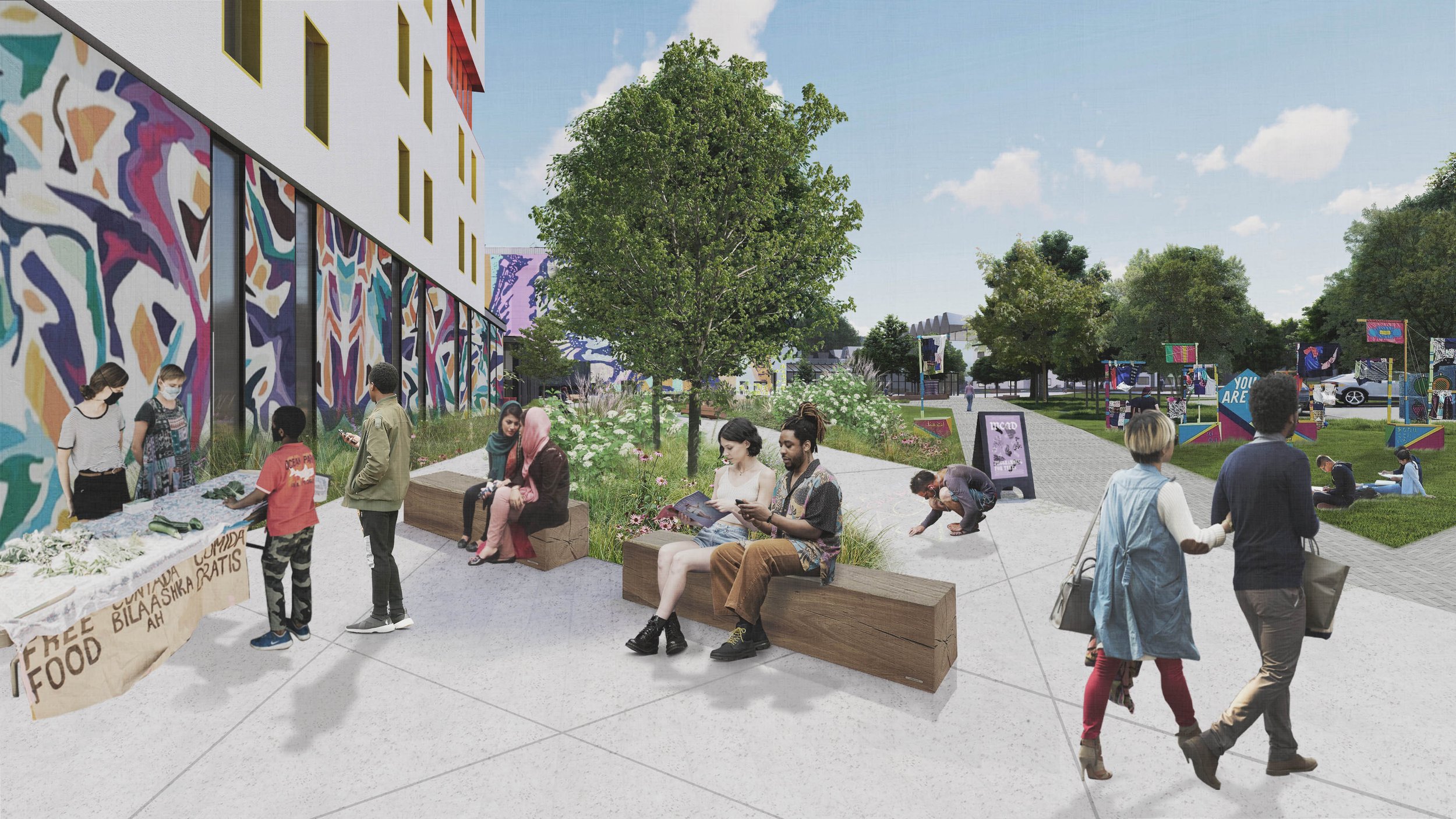
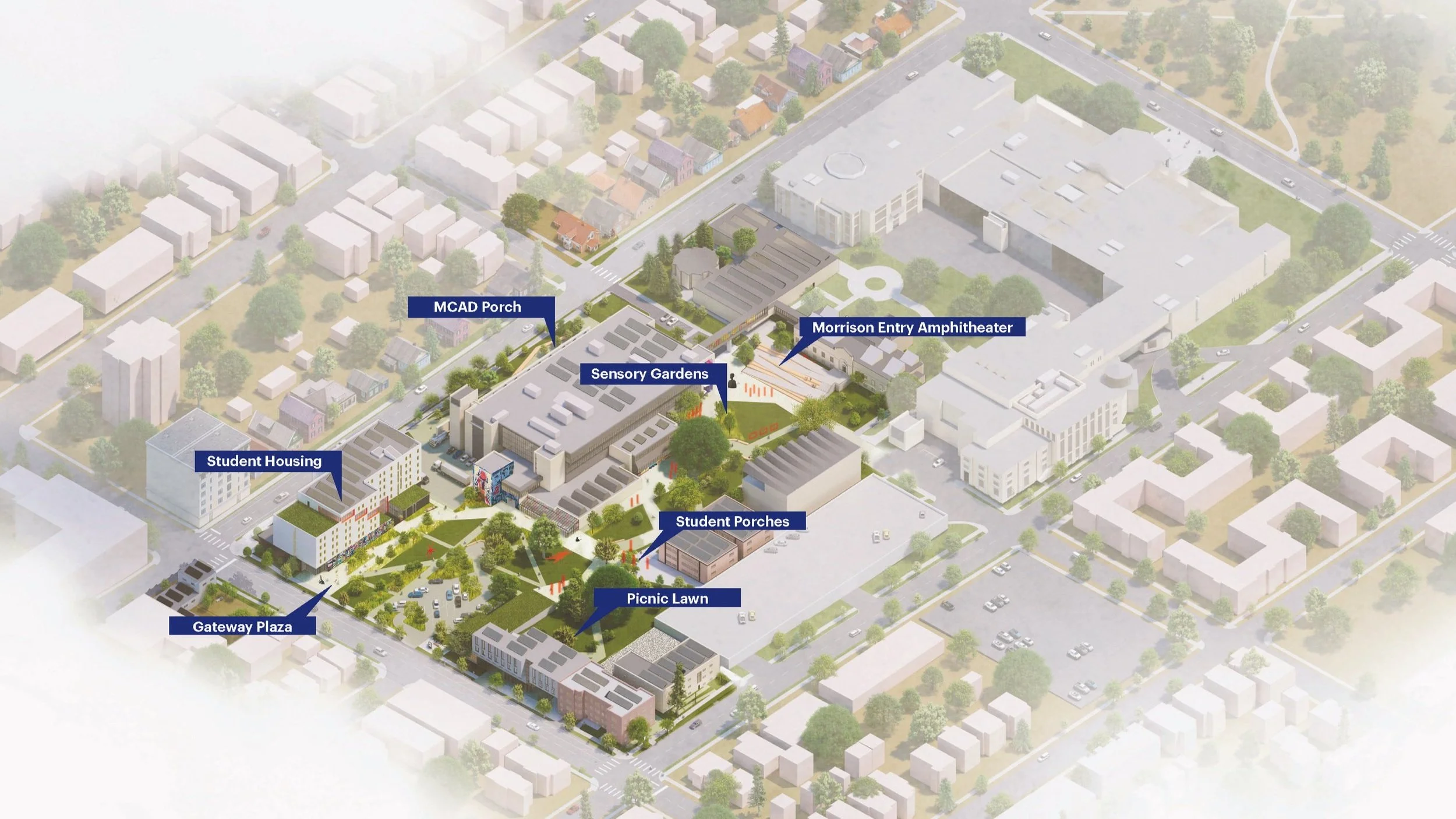
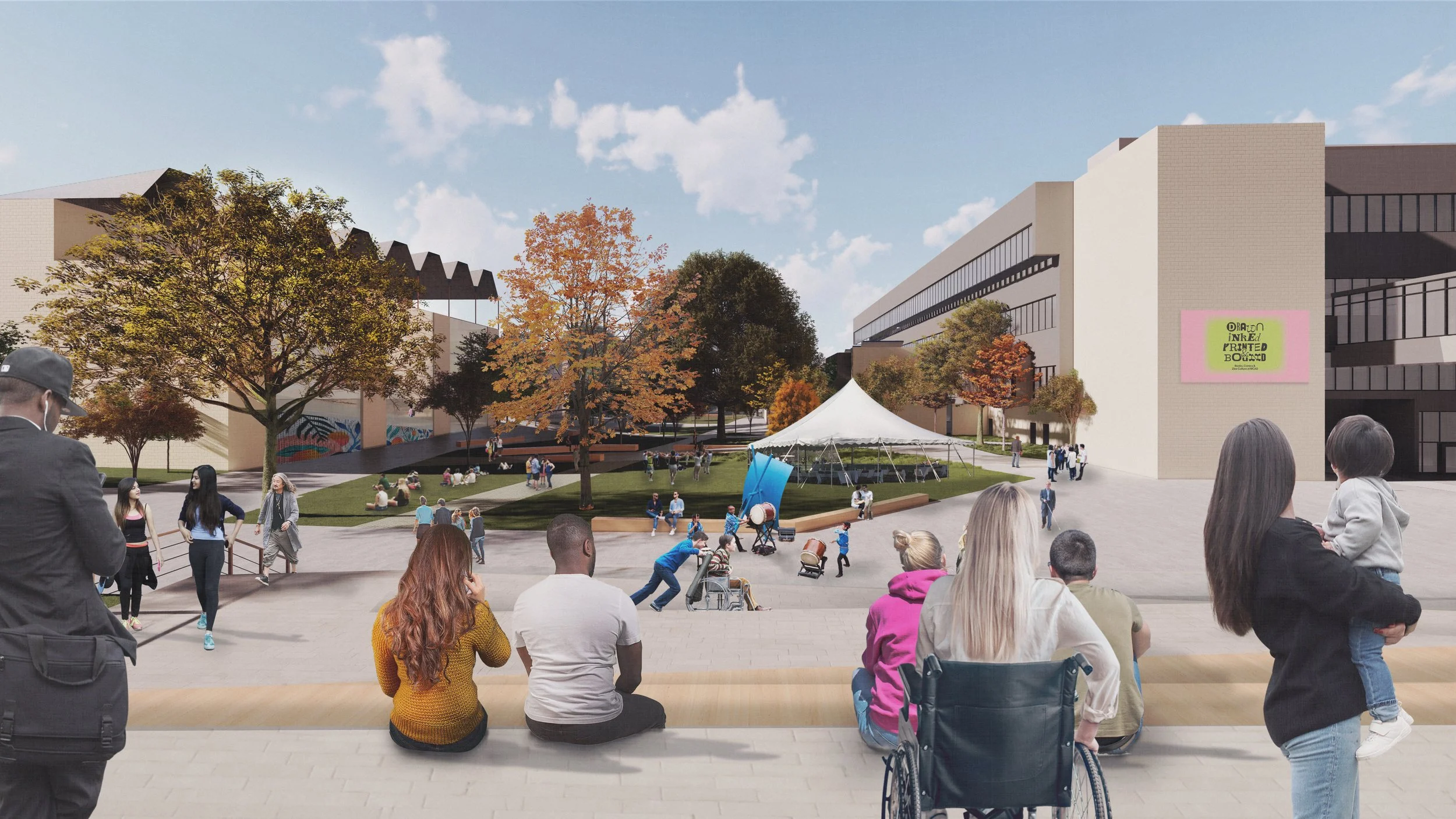
The Minneapolis College of Art and Design Campus Plan provides a guiding vision and framework for the college’s spatial transformation, designed to be dynamic and adaptable to changing needs. A new network of pathways, plazas, small gathering spaces, and native sensory gardens support a variety of uses and opportunities for collaboration across MCAD that provide a spectrum of environments for learning, relaxation, creativity, and work. The network reimagines campus organization, moving away from a singular dominant axis towards a dynamic and accessible framework.
-
Guided by MCAD's Adaptive Strategic Plan, the Campus Plan prioritizes transformational, anti-racist, and radically accessible environments, emphasizing interconnectivity and experiential landscapes. Extensive community discussions shaped this vision, balancing safety with authentic community relationships. Instead of surveillance, the plan fosters positive interactions.
It envisions a campus seamlessly integrated with its surroundings, activating edges to "stitch" MCAD into the neighborhood while enhancing the core as a flexible, safe, and inviting space that supports creativity and collaboration. This involves physical improvements and ongoing engagement, fostering dynamic relationships with external organizations. The plan champions individual safety and accessibility, going beyond compliance with multimodal, multi-sensory interventions to eliminate barriers and enhance well-being.

-
Gateways + Welcome: A hierarchy of barrier-free gateways and plazas will create intuitive, identity-affirming entries. Public "porches" and plazas on the campus’ edges will invite relaxation and exterior art experiences. Parking will shift to edges, prioritizing central public space.
Campus as Backyard: Clear academic and residential zones respond to Mia and surrounding homes, offering distinct living and learning areas. The "Backyard" concept provides scaled green spaces for healthy separation from academics. Gathering plazas near entries will strengthen indoor/outdoor connections, while garden "collaboration nodes" offer intimate outdoor classrooms and artmaking spots.
Landscape Studio: Experiential landscapes foster dialogue and innovation. Immersive spaces with diverse plantings, materials, art, and furniture engage senses. An "art walk loop" integrates public and student art. Work-focused outdoor areas (classrooms, study, reflection) with robust infrastructure to support artmaking and learning.
Campus Resilience: Sustainable strategies promote positive change and provide students with beautiful, immersive garden experiences that celebrate the seasons. Dynamic native gardens enhance mental health and climate resilience, reflecting Minnesota's natural history (wetlands, prairies, forests). These plantings offer biodiversity, stormwater management, wellness, and educational benefits.

PROJECT DETAILS
Location Minneapolis, Minnesota
Client Minneapolis College of Art and Design
Team TEN x TEN, MASS Design Group, Cuningham, Juxtaposition Arts, Pierce Pini & Associates, Walker Consultants, Buro Happold, Transsolar | KlimaEngineering, CPMI, Landscape Research
Area 38 acres
Status Campus Plan Adopted in 2022